
Activitiz city guides
Visit Casablanca: the history, architecture and neighborhoods behind the sights
From the port of Anfa to the arcades of the Habous, Casablanca grew in bursts. Its history explains why a short walk takes you from medina lanes to broad boulevards, and why the city built a second medina.
From Anfa to Casablanca, a city shaped by its port
In the Middle Ages, ships called at Anfa for barley and wheat from the Chaouia plain. The Portuguese destroyed the town in the fifteenth century. In the eighteenth, the Alaouite sultan Sidi Mohammed Ben Abdellah rebuilt it as Dar El-Beïda. At the edge of the old medina, La Sqala is a reminder of how the town was defended from the sea. Its cannons faced the Atlantic. The port’s history from Morocco’s High Commission for Planning · La Sqala bastion.
Maritime trade grew in the nineteenth century. Under the French Protectorate, established in 1912, the expanding port and the construction of a new town drove Casablanca’s rapid growth. Henri Prost was put in charge of the city plan in 1914. He proposed keeping the old medina while laying out broad streets and public squares around it. At Place des Nations Unies, you can still see the old medina give way to the wider streets of the city centre. The Casablanca Urban Agency on the Prost plan.
What the façades tell you about the new town
On Boulevard Mohammed V, covered arcades shelter the shops and connect buildings from different periods. Look up for the geometric lines and rounded forms that often mark Art Deco. Neo-Moorish architecture draws on Moroccan forms and materials such as arches, green tiles and zellige, a mosaic made of cut tiles. Early in the Protectorate, architects used them on new public buildings. Architectural study of the city centre.
Compare a cinema whose sign curves around its façade with the Grande Poste, where arches and coloured tiles frame the entrance to a public institution. Our Art Deco and Neo-Moorish walk points out details like these at four city-centre stops.
The Habous, a medina planned in the twentieth century
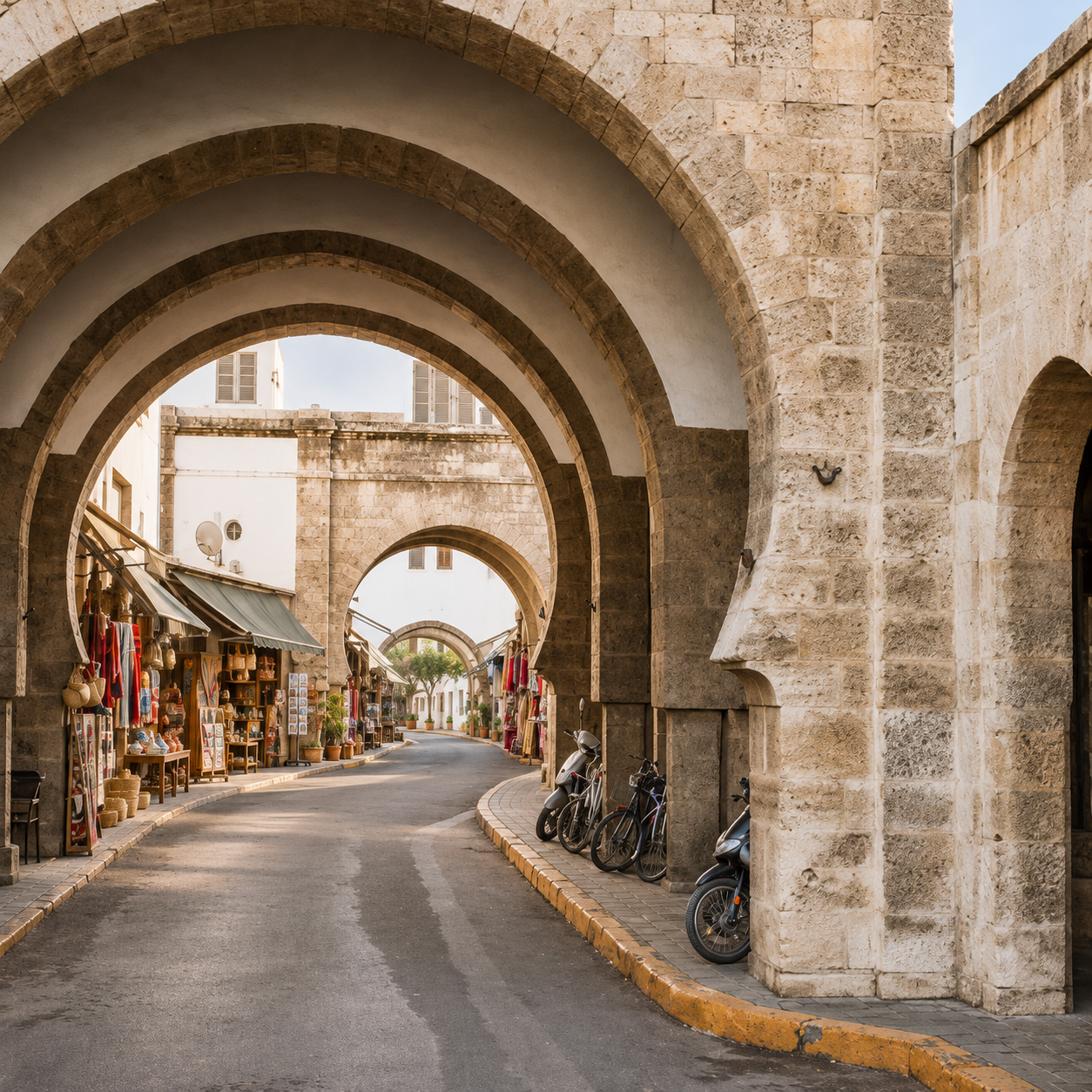
As Casablanca grew, the Protectorate laid out a district for Moroccans away from the European centre. That separation was part of the colonial plan. Its designers drew on the form of a Moroccan medina, with narrow lanes, small squares, mosques and shops under arcades. Notice how a covered passage opens onto a square that leads into another shopping street. Those changes of scale give the new medina its character. The Urban Agency on the planning of the new medina · The Habous quarter.
Pair the old medina with the city centre near Place des Nations Unies. Give the Habous a separate trip towards the Royal Palace district. If you’re going to look at the arcades and shops, our food guide also explains what to try with tea.
Hassan II Mosque, a modern landmark on the Atlantic
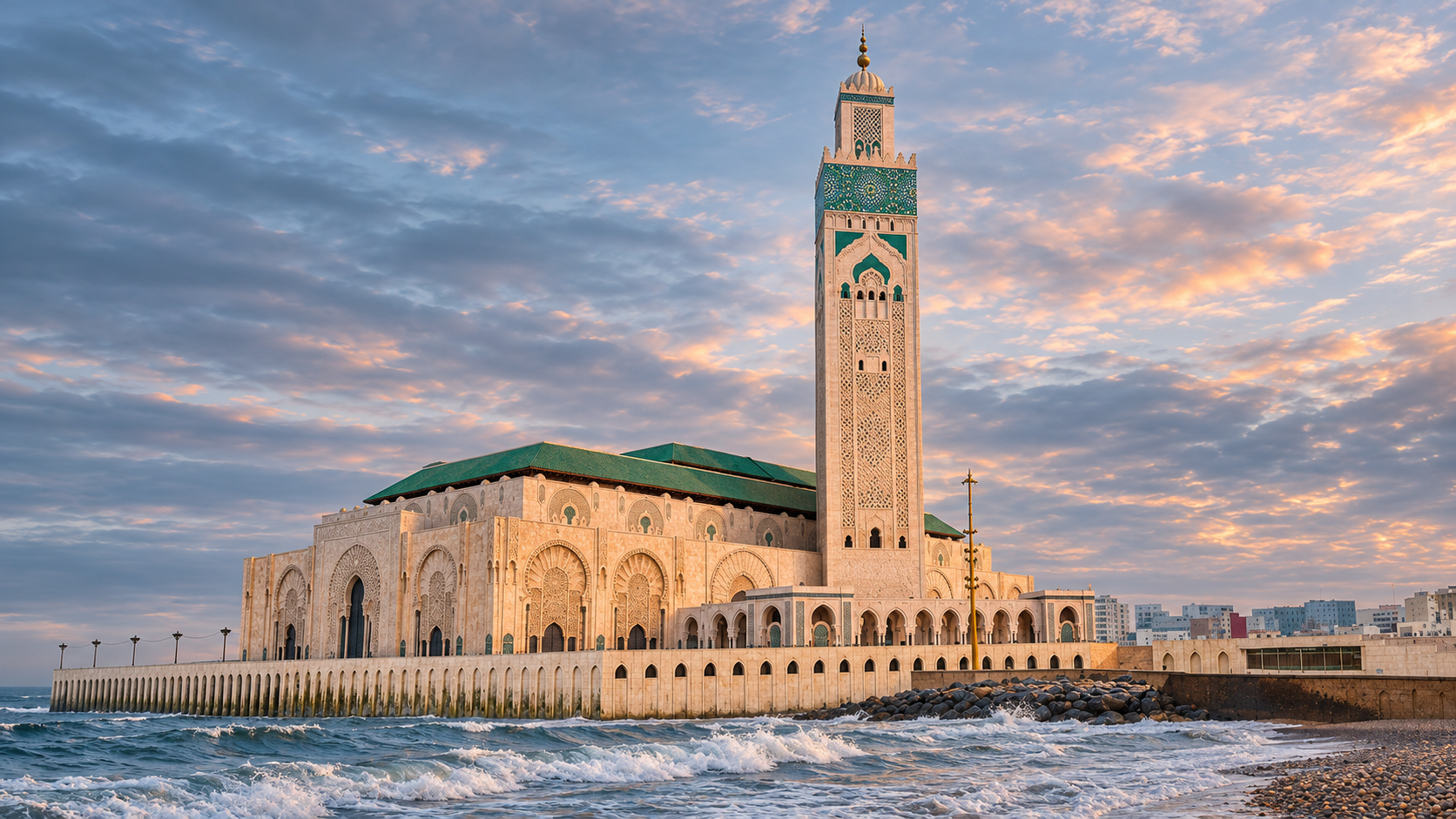
Inaugurated in 1993, Hassan II Mosque gives the waterfront a very different role from the one it had at La Sqala. The bastion defended the port. The mosque reaches out over the Atlantic. The Foundation traces its setting to the Qur’anic verse about God’s throne being upon the water. The Foundation’s history of the mosque.
On the esplanade, step back until you can take in both the minaret and the arcades. Inside, the prayer hall brings together carved wood, zellige and a retractable roof. To see the hall, choose a guided tour through the Foundation. Wear clothes that cover the shoulders and chest and reach below the knees. Visitors remove their shoes before entering.
Which areas fit together on a first visit?
To understand the centre, pair the old medina with the façades of the modern city. Place Mohammed V and Boulevard Mohammed V are different landmarks. The square is where you’ll find the civic buildings. The boulevard takes you to the Central Market, where the food guide explains how to choose fish and have it cooked.
To see inside the mosque, pick a tour time first. Add the centre if you want to understand its connection with the port, or the Habous if you’d rather explore another commercial neighbourhood.
Continue exploring
The Last Drawing of Casablanca’s Architect
Lina’s grandfather left behind a notebook of unfinished sketches and clues to a final message. Help her piece it together on a self-guided treasure hunt through Casablanca. Allow 2–3 hours for the trail.
Discover the Casablanca treasure hunt