
Activitiz city guides
Visit Marrakech: understand the medina, its palaces and gardens
An Almoravid dome, an Almohad minaret and the courtyards of the Saadians tell the story of three eras in Marrakech. The city’s squares and gardens tell another story, about where people gather and how water made a city possible.
From the Almoravids to the Saadians, three layers of the medina
The Almoravids founded Marrakech around 1070. Near Ben Youssef Madrasa, a small dome still tells you something about their capital. The Koubba sheltered a place where worshippers washed before entering the neighbouring mosque. The dome dates from the twelfth century. The nearby madrasa, in its present form, belongs to the Saadian period. A few steps separate buildings from different centuries. The Ministry of Culture on the Almoravid Koubba · The history of the madrasa.
The Almohads took Marrakech in 1147, and their capital’s reach extended into Andalusia. Koutoubia and the kasbah are two landmarks from that period. At Bab Agnaou, carved stone marks the entrance to the kasbah, the seat of power. Later the Saadians made Marrakech their capital again. Their dynastic tombs, close to that gate, and Ahmad al-Mansur’s reception palace show two ways the dynasty expressed its power, through royal burial and the ceremony of court. The medina’s World Heritage listing · The history of the Saadian Tombs.
El Badi or Bahia, two ways to see how power was displayed
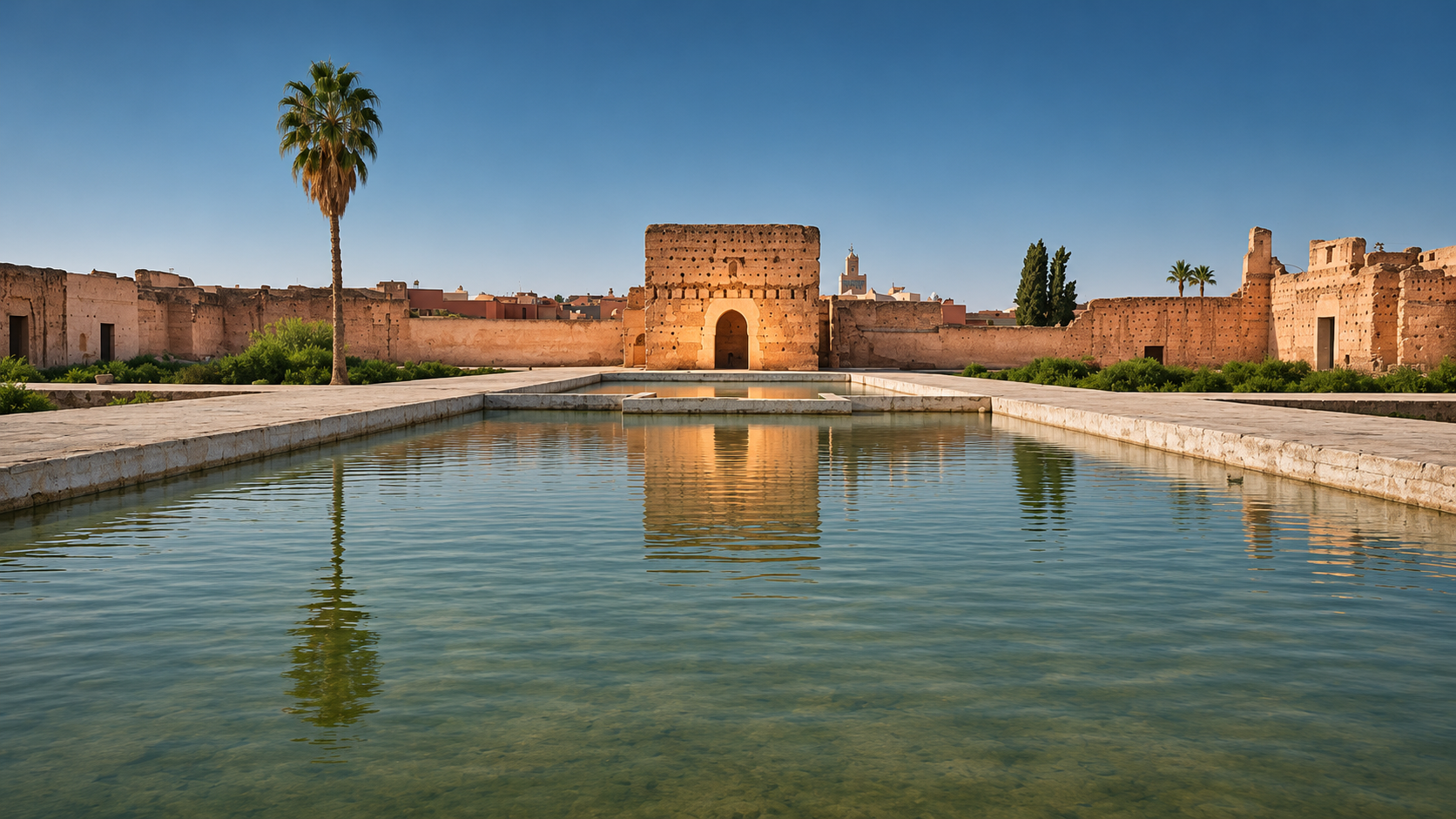
Choose El Badi for its scale. Commissioned by Ahmad al-Mansur in the late sixteenth century, the palace received the sultan’s guests. The pools and the great courtyard still give a sense of the way a reception was staged. The palace in the Museum With No Frontiers inventory.
Choose Bahia for its decoration and changing spaces. This residence of grand viziers took shape in the nineteenth century and grew as neighbouring houses were added. Passing from a courtyard to a garden and then a reception room, you can see how the palace grew in stages. The Ministry of Culture on Bahia Palace.
From the storytellers’ square to the kasbah
At Jemaa el-Fna, what happens on the square tells you as much as the buildings around it. It is a crossroads for the souks and a stage where people gather around storytellers, musicians and other performers. UNESCO recognises these living traditions. If a circle forms, stop at its edge and see what has drawn people together.
Choose the souks and Ben Youssef to look closely at the materials and uses of ornament. The south of the medina brings gates, palaces and tombs together on the scale of a former seat of power. The self-guided walking guide has the stops and directions for each area.
How water reached the city’s gardens
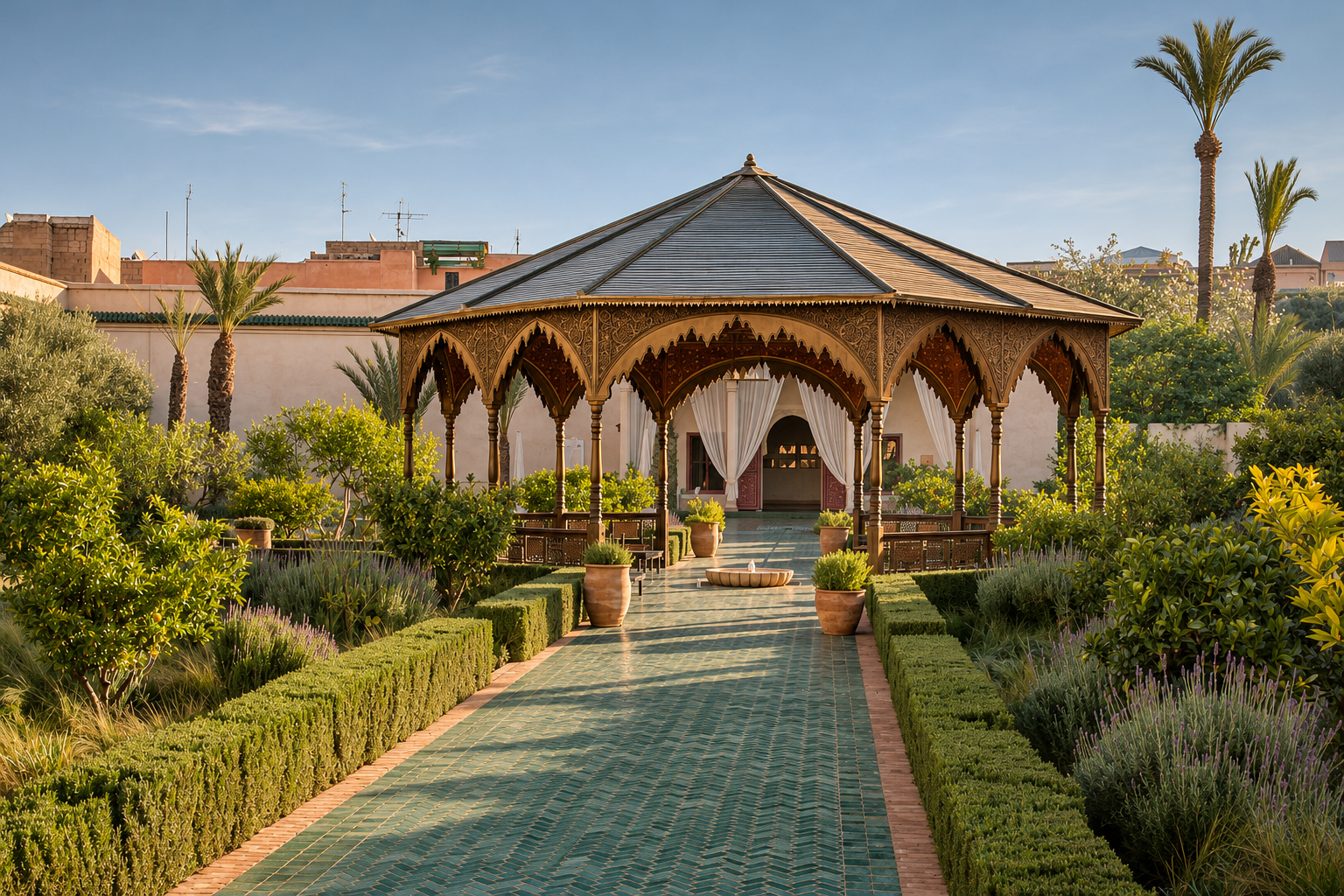
At Le Jardin Secret, you can follow the channels and pools like lines on a plan. First, water had to reach the city. Underground galleries called khettaras tapped groundwater and carried it by gravity. A riad with its own supply was a sign of privilege. Follow the garden’s water trail to see how the supply reached the planting beds.
Le Jardin Secret fits into a visit to Mouassine. Set aside a separate slot for Majorelle, outside the walls, if you’re drawn to its plant collections and contrasts of colour. The family guide compares the outings with young children in mind.
Two ways to explore a little further
At the table. Tanjia tells another story about how the medina works, through the shared heat of the hammam furnace. The food guide explains what happens between the clay jar and your plate.
Get involved. The unusual activities guide has ways to move from looking to making, in a workshop or by putting together a photo series in the medina.
Continue exploring
Two walks with maps
Souks, Ben Youssef, kasbah and palaces: choose your route.
Marrakech with children
Choose outings around their ages and your available time.
Experiences to take part in
Crafts, cooking and a treasure hunt: participate in the discovery.
What to eat in Marrakech
Plan a food outing at your own pace.
The Sultan’s Quest in the medina
Solve puzzles from Koutoubia to the Saadian Tombs, through the souks and landmarks of the medina. Allow 2 to 3 hours for the game. Monument tickets are paid separately.
Discover the Sultan’s Quest